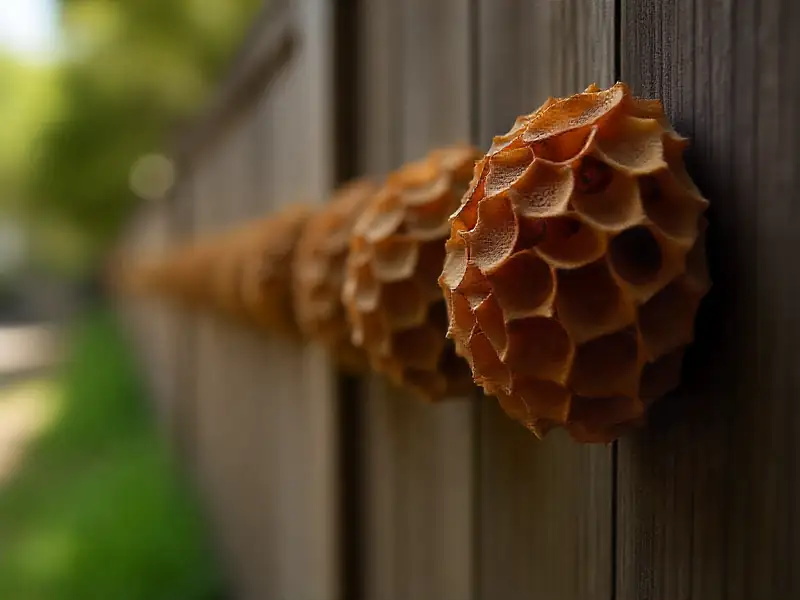
Licensed technicians clear wasp nests and bee hives across Melbourne

Wasp and Bee Removal

Wasp and Bee Removal in Melbourne starts with a same-day inspection, a fixed price, and a technician who has cleared hundreds of nests from eaves, wall cavities and roof voids.

We handle European wasps, paper wasps and bee swarms for homeowners, renters and property managers across the inner and south-eastern suburbs. If a nest is within 20 metres of your door, we treat it today.

↗
Fast online booking

Request service today

Tell us what is happening. Our local team will confirm your visit shortly.

No spam. No obligation. Just practical help.
Thanks — we'll call shortly to confirm your visit.
Wasp and Bee Removal
Careful work. Honest options.
About this service

What Wasp and Bee Removal in Melbourne involves

Wasp and Bee Removal in Melbourne is a licensed pest control service that locates, treats and removes active wasp nests and bee hives from residential and commercial properties.

A technician inspects the roof void, eaves, wall cavities, garden beds and meter boxes, identifies the species, then applies a dust formulation or residual insecticide directly into the nest entry. Most single-nest jobs take 45 to 90 minutes on site.

We remove the nest where it is accessible, seal the entry point with mesh screens or foam sealants, and leave you with a written treatment record.

Melbourne's warm spells from October through March push European wasp colonies past 10,000 workers, and a single nest under a Canterbury eave can send foragers into a kitchen within days. Paper wasps build smaller nests on fences and window frames, while honeybee swarms cluster on branches in spring.

If you have been searching wasp removal Melbourne near me at 9pm because the kids cannot use the backyard, that is exactly the call we take. We also handle bee hive removal Melbourne suburbs jobs where the hive sits inside a wall.

  • ✓ Same-day nest treatment
  • ✓ Licensed and fully insured
  • ✓ Safe around kids and pets
  • ✓ Fixed price before we start
What's included

What our wasp and bee removal service includes

Every standard job includes inspection, species identification, treatment, nest removal where accessible, entry-point sealing and a written record. We tell you upfront if a job needs extra equipment or a second visit, and you approve that before we proceed. No hidden line items.

01
✓

Full property inspection

We check the roof void, eaves, wall cavities, garden beds, meter boxes and shed fascias. European wasps often run a second entry, so we map every access point before treating. Inspection takes 15 to 25 minutes on a typical Melbourne home.

02
✓

Species identification

European wasps, paper wasps, native wasps and honeybees all need different handling. We identify the species on site so the treatment matches the colony, and we advise whether a bee hive can be relocated rather than destroyed.

03
✓

Targeted treatment

We apply dust formulations or residual insecticide directly into the nest entry using a dust applicator or bait gun. No broad spraying across your garden. The product is registered for residential use and applied at the label rate.

04
✓

Nest removal and sealing

Where the nest is reachable, we remove it and bag it for disposal. We then seal the entry with mesh screens, foam sealants or wood treatments. This is what stops a new colony using the same gap next season.

05
✓

Written treatment record

You receive a record listing the product used, the application rate and the date. It is useful for property managers, body corporate records and any future pest control work on the same property.

How it works

How our wasp and bee removal process works

You describe where the nest is and how active it is. We ask about access, roof type and whether anyone has been stung. That call takes five minutes and lets us load the right equipment, including a thermal imaging camera for nests hidden in wall cavities.

The technician walks the property, confirms the species, and maps every entry point. European wasps often have a second entry, so we check the roof void, eaves and ground-level gaps. Inspection takes 15 to 25 minutes on a typical Melbourne brick veneer home.

We apply dust or residual insecticide into the nest entry using a dust applicator or bait gun. Where the nest is reachable, we remove it and bag it. Where it sits inside a wall, we treat in place and seal the cavity. The active phase takes 30 to 45 minutes.

We close the entry points with mesh screens, foam sealants or wood treatments depending on the surface. This stops a new colony moving into the same gap. We also flag any secondary risk spots, like a meter box or shed fascia, at no extra charge.

You get a written record of the product, the rate applied and the date. We check the nest site at the 7 to 10 day mark by phone, and if activity continues we return under our service warranty. Most clients see zero wasp activity within 48 hours.

Wasp and Bee Removal
STEP 01Phone triage

You describe where the nest is and how active it is. We ask about access, roof type and whether anyone has been stung. That call takes five minutes and lets us load the right equipment, including a thermal imaging camera for nests hidden in wall cavities.

Tools & methods

Tools and methods we use

01
✓

Dust applicators

Used to inject insecticidal dust directly into nest entries in eaves, wall cavities and roof voids. Precise placement means less product and no broad spraying across your garden.

02
✓

Insecticide sprayers

For exposed paper wasp nests and perimeter treatments. We use low-residual formulations and apply them only to the surfaces that need protection.

03
✓

Thermal imaging cameras

Locate nests hidden inside wall cavities and roof voids by detecting the heat signature of an active colony. This avoids unnecessary demolition or exploratory drilling.

04
✓

Mesh screens and foam sealants

Used to close entry points after treatment. Sealing is what stops a new colony moving into the same gap next season.

05
✓

Bait guns

Deliver measured doses of bait gel or dust into tight gaps. Useful for nests inside meter boxes, fascia joints and brick weep holes.

06
✓

Moisture meters

Check for damp timber around nest sites. Wasp and bee activity often sits alongside moisture damage, and the meter tells us whether further treatment is needed.

Real results

Before and after.

European wasp nest under a Canterbury eave
Wasp and Bee Removal

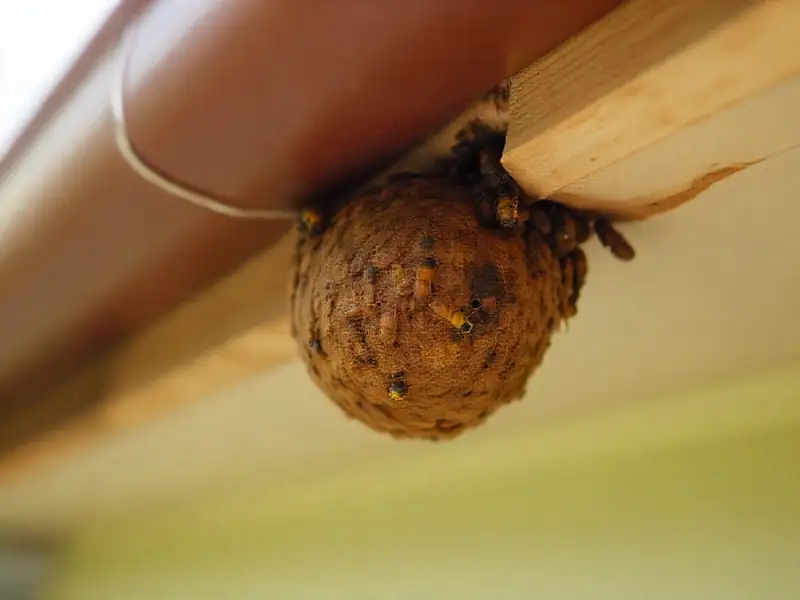
European wasp nest under a Canterbury eave

A homeowner in Canterbury had a European wasp nest above the back door and had stopped using the yard. Foragers were entering the kitchen through a gap near the rangehood vent. Two family members had been stung in a week.

After: We treated the nest entry with dust, removed the nest, and sealed both the eave gap and the rangehood vent line. Wasp activity stopped within 36 hours. The family was back in the yard the following weekend.

Book this service →
Bee hive inside a Glen Iris wall cavity
Wasp and Bee Removal

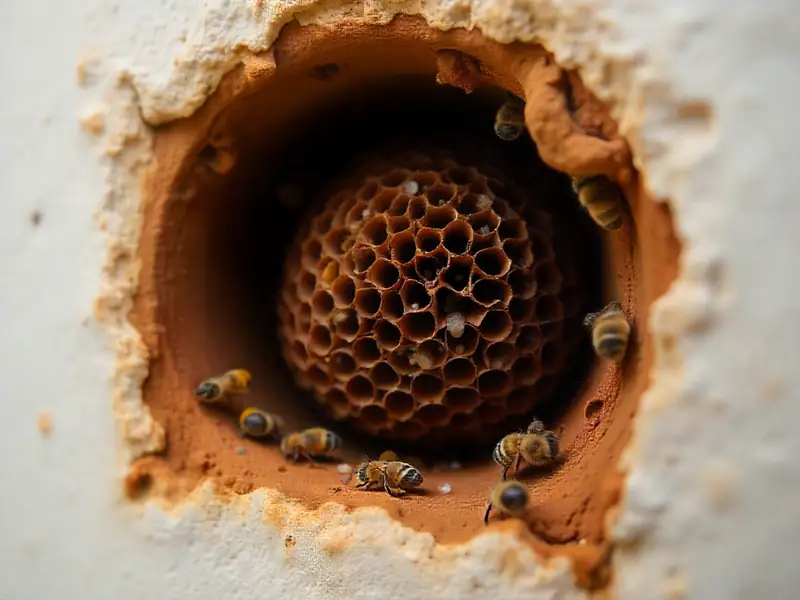
Bee hive inside a Glen Iris wall cavity

A bee colony had moved into a wall cavity beside a bedroom window in Glen Iris. Honey staining was appearing on the plasterboard, and ants had started trailing along the skirting. The homeowner was worried about the wall being opened up.

After: We treated the hive in place, removed the accessible comb through a small access point, and sealed the cavity. The staining was cleaned and the wall was left intact. Ant activity stopped once the honey source was removed.

Book this service →
Paper wasp nests on a South Yarra fence line
Wasp and Bee Removal

Paper wasp nests on a South Yarra fence line

A property manager in South Yarra had three paper wasp nests along a shared fence and a fourth in the meter box. Tenants were avoiding the courtyard, and a tradesperson had been stung while reading the meter.

After: We treated and removed all four nests in a single visit and sealed the meter box entry. The courtyard was usable again the same afternoon, and the meter could be read safely the next day.

Book this service →
Problems we solve

Problems we solve for Melbourne properties

Wasps and bees create different problems depending on where the nest sits and how long it has been there. Here are the situations we deal with most often, and what happens if they are left alone.

Ask a pro →
01

Active wasp nest beside a doorway or path

We treat the nest entry with dust, remove the nest where accessible, and seal the gap. Most clients can use the doorway again within 24 to 48 hours, once the colony has stopped returning.

↗
02

Bee hive inside a wall cavity

We assess whether the hive can be relocated. If it cannot, we treat it in place, remove accessible comb, and seal the cavity. We also check the surrounding wall for moisture damage.

↗
03

Recurring wasp activity each spring

We identify the entry points and proof them with mesh screens, foam sealants and wood treatments. That breaks the cycle, and we record the sealed locations so future visits start from a known baseline.

↗
04

Nest in a roof void or subfloor

We use thermal imaging cameras to locate the nest, then treat it through the nearest access point. We seal the internal gap so wasps cannot re-enter the living space.

↗
Good questions

Frequently Asked Questions

Direct dust application into the nest entry is the most effective method for European wasps in Melbourne, because foragers carry the dust back into the colony. We use a dust applicator rather than a surface spray, then seal the entry with mesh screens or foam sealants. For exposed paper wasp nests, a targeted residual insecticide and physical removal works faster.

Call a licensed pest controller rather than attempting it yourself. European wasp nests can hold more than 10,000 workers by late summer, and disturbing the entry without protective gear leads to multiple stings. We treat the nest, remove it where accessible, and seal the cavity. Most clients see no activity within 48 hours of treatment.

Yes, when applied correctly. We use targeted dust formulations and place product directly at the nest entry rather than broadcasting it across the yard. Keep pets and children clear of the treated zone for the drying window we specify, usually two to four hours. All products we use are registered for residential use and applied by a licensed technician.

Ready when you are

Need Wasp and Bee Removal in Melbourne today?

We are licensed, insured and carry wasp-specific treatments on every van. Get a quote with the nest location and we will give you a fixed price and a realistic arrival window. Same-day service on weekday bookings before 2pm.

Schedule service →
Request an appointment

Book a Melbourne pest inspection

Send us the form with your suburb and what you have seen, and we will come back with a time window and a price range. Servicing Melbourne and the surrounding suburbs.

Office hoursMon–Sat 9am–7pm
Request received — our team will be in touch shortly.